Local Vendor Spotlight: SkodenSisters
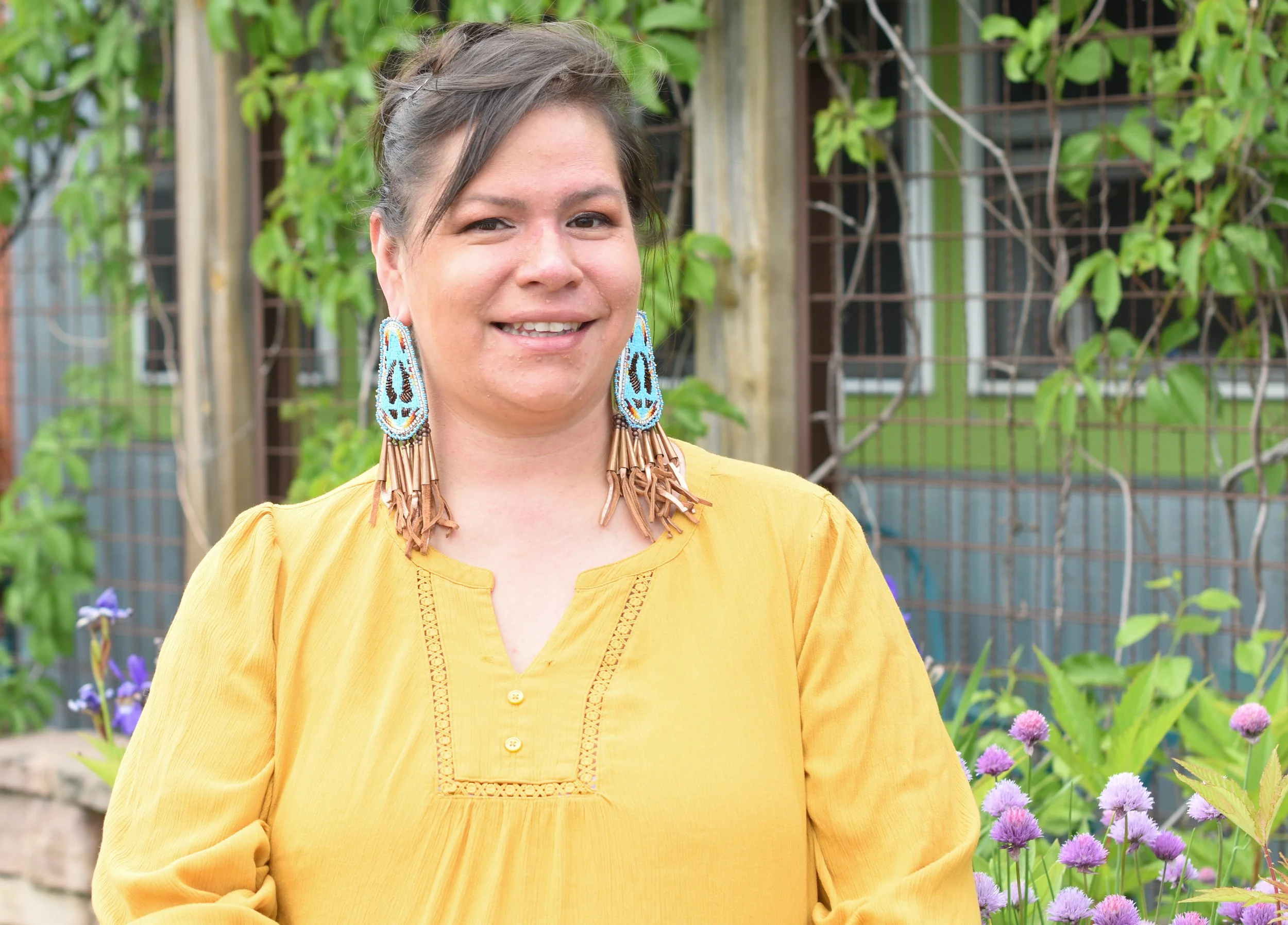
Pamela Valdez, beadwork artist & owner of SkodenSisters
For Pamela Valdez, beadwork artist behind the SkodenSisters label, art is more than a creative outlet — it's a way to celebrate Anishinaabe culture, community, and connection.
“In Indigenous culture, there’s always been a tradition of our people crafting together,” said Pamela. “Being together, talking, laughing, creating – it’s all about the community and the camaraderie.”
Pamela has been a beadwork artist for 30 years, with her love for the craft beginning out of admiration and necessity.
“I really wanted it for myself but couldn’t afford it,” she said. “So, I learned to make it myself. I started by watching friends and aunties, and it grew from there.”
Having already honed her artistic skills through painting and drawing, beadwork quickly became her niche, the medium in which she felt most connected to her culture and community. Pamela said she’s eternally grateful for the people that helped further develop her skill along the way.
“There are too many to list,” she said. “I’m very thankful for a vibrant community of aunties and mentors. My parents put me into those spaces starting at a very young age. My mom isn’t Indigenous, but she always helped facilitate Native craft and culture in my life.”
That support provided what Pamela describes as a sense of “cultural abundance,” an opportunity not all Indigenous people have experienced.
“I come from a place of cultural abundance, and that’s not true for a lot of people,” she said. “Many Indigenous people are reclaiming traditions that were taken from us. I live in an era where I didn’t have to work too hard to find who I am, which I recognize as a privilege. So, I feel a responsibility to share what I know and to continue those traditions through artwork, food, storytelling, and caring for the land.”
While already a strong beadwork artist, Pamela sought formal training at the Institute of American Indian Arts in Santa Fe, New Mexico, where she studied with accomplished Indigenous artists.
“Being around other artists elevated my work,” she said. “Learning techniques, learning execution, learning style — it helped me grow.”
As a citizen of M’chigeeng First Nation, Pamela draws inspiration from florals and plants native to the Great Lakes region, where she’s spent most of her life. Using seed beads and locally and sustainably harvested wiigwaas (birch bark), her designs available at the Co-op feature motifs of ode’imin (strawberries) and miinan (blueberries), as well as color palettes that represent the scenery that inspires her. Each piece has a story, honoring the beauty of the natural world and Anishinaabe traditions.
“Indigenous peoples have an innate sense of connection to the place they live and a love for celebrating and honoring nature, history, and the gifts we’ve been given,” she said. “Wearable art is an expression of that gratitude.”
One of Pamela’s favorite palettes draws on the colors of fire — brown, red, orange, yellow, and white, paired with black or turquoise to represent the sky. Fire is a deeply spiritual and sacred element in many Anishinaabe teachings, understood as a source of life.
“Fire is the balance to water,” said Pamela. “You can’t have one without the other. It’s warmth, it’s light, it’s protection, it’s what we cook with — it’s at the center of everything.”
There’s also much cultural significance in native fruits that appear in her work, especially the strawberry or “heart berry.” As a teenager, Pamela participated in a berry fast, a coming-of-age tradition in which girls abstain from eating berries for up to a year to express gratitude, practice self-discipline, connect to community, and honor the current life transition.
“That sacrifice is symbolic of the transition into womanhood,” said Pamela. “It’s harder than you’d think, and it brings people together. My friends have all done this and together we can appreciate the significance of that sacrifice. It’s a passing of knowledge and values from one generation to the next.”
Her mother taught her how to responsibly source wiigwaas, another material that’s been used for generations to make everything from canoes and baskets to artwork and scrolls for recording history. Birch bark, as a premium artistic material, is oftentimes taken directly off the tree. But once you take it off, it doesn’t grow back the same. It scars over and can heal itself if done correctly, but it’s not worth the risk, said Pamela.
“My mom just hated that,” she said. “So, I’ve continued to harvest from the ground, where I can ensure no harm.”
With a focus on creating lightweight, wearable pieces, Pamela said she sees her jewelry as opportunities for conversation, connection, and learning.
“I love wearing big flashy earrings to show I’m proud of my culture,” said Pamela. “I use them as a way to communicate and connect.”
However, Pamela said her earrings are not exclusively for Indigenous folks and it’s not cultural appropriation to wear them if you’re a settler.
“It’s actually a form of cultural appreciation! As my earrings are not regalia, they are for everyone to wear and enjoy,” she said. “I appreciate that people love our artwork.”
She’s also observed what a great conversation starter they can be, which further supports local makers and teaches about Native cultures.
SkodenSisters began as a cooperative venture among friends selling their work at vendor tables at powwows. Pamela and her friend, Molly Meshiguad, started selling together in 2022 — Pamela’s focus was on beaded earrings, medallions, and custom baby bonnets, while Molly specialized in moss bags, which are traditional Indigenous baby carriers. The name was a suggestion from Molly’s daughter — Skoden is an Indigenous slang term meaning "let's go then."
“It originally came from people wanting to fight, but we used it as ‘let’s do it, let’s go,’ because why not?”
The name continues to reflect that spirit of possibility, collaboration, and sharing Indigenous culture and art within the community of Gitchi-Namebini Ziibing (Marquette) and beyond.
“I am honored to carry on the name and still have the opportunity to include my friends in the business when possible,” she said.
Becoming a vendor at the Marquette Food Co-op has been an especially rewarding experience, said Pamela. She’s been an employee of the store for several years, starting as a cashier and moving into her current role as community services coordinator.
During her time at the Co-op, she’s helped lead programming and initiatives that have helped further educate the local community about the history of our land and those who called it home before us.
“My friends (April Lindala and Marty Reinhardt) developed the Decolonizing Diet Project with NMU and the Co-op,” said Pamela. “That work needed to be carried on after their wrap-up, and I’m honored to be given the opportunity to be that person.”
Since then, Pamela has helped develop an Indigenous scavenger hunt featuring native foods throughout the store, created coloring sheets and other artistic educational pieces for children, helped develop language for an official land acknowledgement, and regularly attends workshops, community talks, and other events where she shares Native food stories and recipes.
“Working at the Co-op is one of the strongest arrows in my quiver,” said Pamela. “I’m proud to be able to provide a voice and carry the mantle for our people.”
The Great Lakes continue to inspire her work daily. The colors of the forests and the flowers, the movement of water, the native animals and the traits they symbolize, and even the pebbles along the shoreline all find their way into her art.
“If you’re walking along the shoreline and looking down at the pebbles, it’s like beadwork,” she said. “The inspiration is everywhere.”
Ultimately, Pamela hopes her work helps people feel connected. Whether they are worn by Indigenous people reconnecting with their heritage or by community members discovering Indigenous artistry for the first time, she hopes each piece carries the same feeling that inspired her to start beading decades ago.
“I hope people feel better about themselves when they wear them,” Pamela said. “I hope they get the same feeling I get.”