
About the MFC
Cooperatively Owned Grocery
The Marquette Food Co-op (MFC) is a full service natural and organic, community-owned grocery store. The Co-op, conveniently located in downtown Marquette, provides shoppers with access to organic, local, and fairly traded food and products. It also places a strong emphasis on community outreach, through cooking classes and other food education opportunities.
We are a consumer cooperative that helps keep our community’s wealth within the community. Unlike a discount club where profits go to shareholders elsewhere, a share in the Marquette Food Co-op is communal ownership of the business. It protects access to a local, independent grocery store, gives the community access to products they want, and distributes the stores profits locally.
While everyone is welcome to shop at the MFC, purchasing a membership share awards certain benefits that are only for owners. This includes a rewards program that gives 1% back on every dollar, discounted cooking classes, and patronage dividend during profitable years.
Most importantly, the business is democratically organized. All owners have the right to run or vote for the Board of Directors, which ensures sound management and provides long-term planning for the business. Our store is governed by the Seven Cooperative Principles and guided by a mission set by our Board of Directors, known as the Global Ends Policy.

Global Ends Policy
The Marquette Food Co-op provides the region it serves with access to food, products, services, and education that foster a thriving, equitable, and resilient community by:
- Prioritizing local and organic food systems
- Promoting cooperative growth opportunities
- Supporting an equitable shopping experience
- Focusing on sustainable environmental outcomes

Seven Cooperative Principles
Voluntary & Open Membership
Cooperatives are voluntary organizations, open to all persons able to use their services and willing to accept the responsibilities of membership, without gender, social, racial, political, or religious discrimination.
Members’ Economic Participation
Members contribute equitably to, and democratically control, the capital of their cooperative. At least part of that capital is usually the common property of the cooperative. Members usually receive limited compensation, if any, on capital subscribed as a condition of membership. Members allocate surpluses for any or all of the following purposes: developing the cooperative, possibly by setting up reserves, part of which at least would be indivisible; benefiting members in proportion to their transactions with the cooperative; and supporting other activities approved by the membership.
Education, Training & Information
Cooperatives provide education and training for their members, elected representatives, managers, and employees so they can contribute effectively to the development of their cooperatives. They inform the general public, particularly young people and opinion leaders, about the nature and benefits of cooperation.
Concern for Community
While focusing on member needs, cooperatives work for the sustainable development of their communities through policies accepted by their members.
Democratic Member Control
Cooperatives are democratic organizations controlled by their members, who actively participate in setting policies and making decisions. The elected representatives are accountable to the membership. In primary cooperatives, members have equal voting rights (one member, one vote) and cooperatives at other levels are organized in a democratic manner.
Autonomy & Independence
Cooperatives are autonomous, self-help organizations controlled by their members. If they enter into agreements with other organizations, including governments, or raise capital from external sources, they do so on terms that ensure democratic control by their members and maintain their cooperative autonomy.
Cooperation Among Cooperatives
Cooperatives serve their members most effectively and strengthen the cooperative movement by working together through local, national, regional, and international structures.
HISTORY OF MARQUETTE
FOOD CO-OP
Procuring Natural & Organic Foods at Reasonable Prices
1971
How it Began
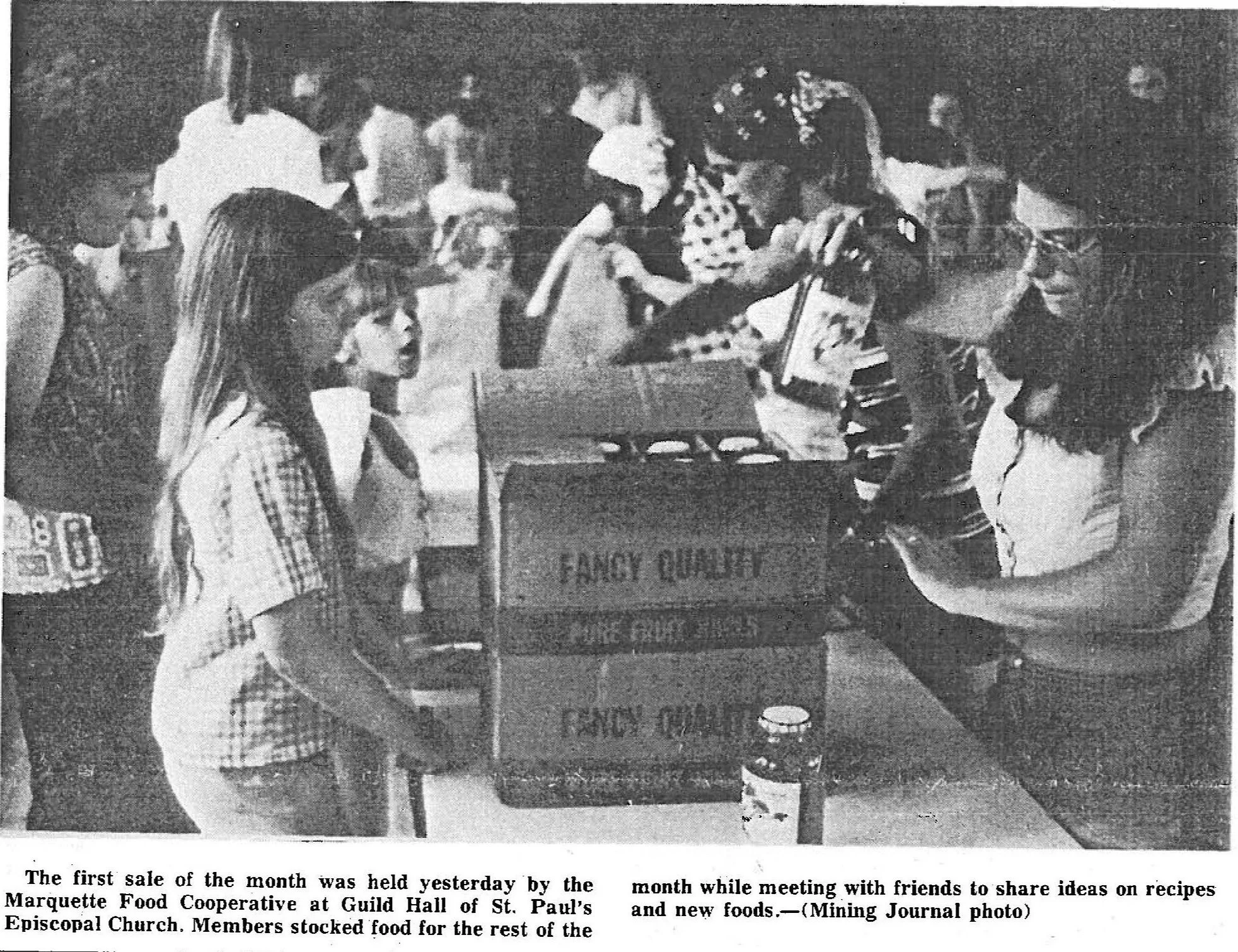
The Marquette Food Co-op began in 1971, when a group of people got together to find a way to procure natural foods at reasonable prices in an area where there were no deliveries being made. Members took turns driving to the People’s Warehouse in Ann Arbor to pick up the food. The monthly order meetings and potluck would often attract 50-60 members. During this period in the Co-op history, the distribution center had a series of locations, first in a private house on Ohio St., then in a garage on Third St., and finally in the basement of a store on the corner of Washington and Seventh St. The food was kept in cold storage at Jilbert’s Dairy and hauled back and forth to the basement one day a week.
1970s - 1990s
Building Community
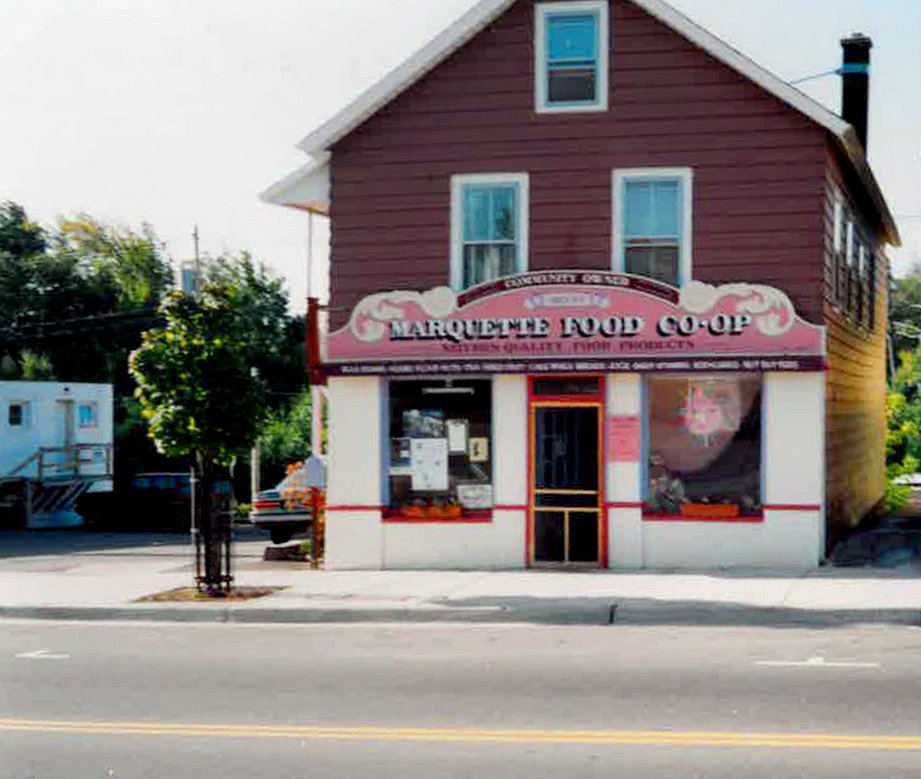
In the mid- 1970s, Common Health Warehouse in Duluth expanded its distribution area, and regular deliveries began in Marquette. At that point, Marquette Food Co-op was the third largest customer after the Duluth and Keweenaw Co-ops, and was in a position to hire its first manager. As membership continued to grow, many members loaned money to purchase the building at 325 W. Washington, which was to be the Co-op’s home for over twenty years. Now the Co-op was operating a retail storefront, open during regular business hours, with a full-time paid manager, but still relying heavily on the volunteer hours put in by the members.
The financial wellbeing of the Co-op varied enormously over the next two decades, reflecting local and national trends in both the economy and the co-operative movement. There were periods of rapid growth, stable years, and difficult times, but there was always a core group of hardworking members dedicated to the co-operative principles, who were often required to volunteer long hours and make difficult decisions. In the mid- 1990s, the Co-op faced its most serious financial crisis, and with mounting debt, declining membership and high management turnover, it came close to closing its doors. Again, the membership responded, and kept the store open, operating with an entirely volunteer staff, and some rigorous financial controls. When the financial situation improved, an experienced manager was hired, and the Co-op grew in leaps and bounds.
Early 2000s
Expansion
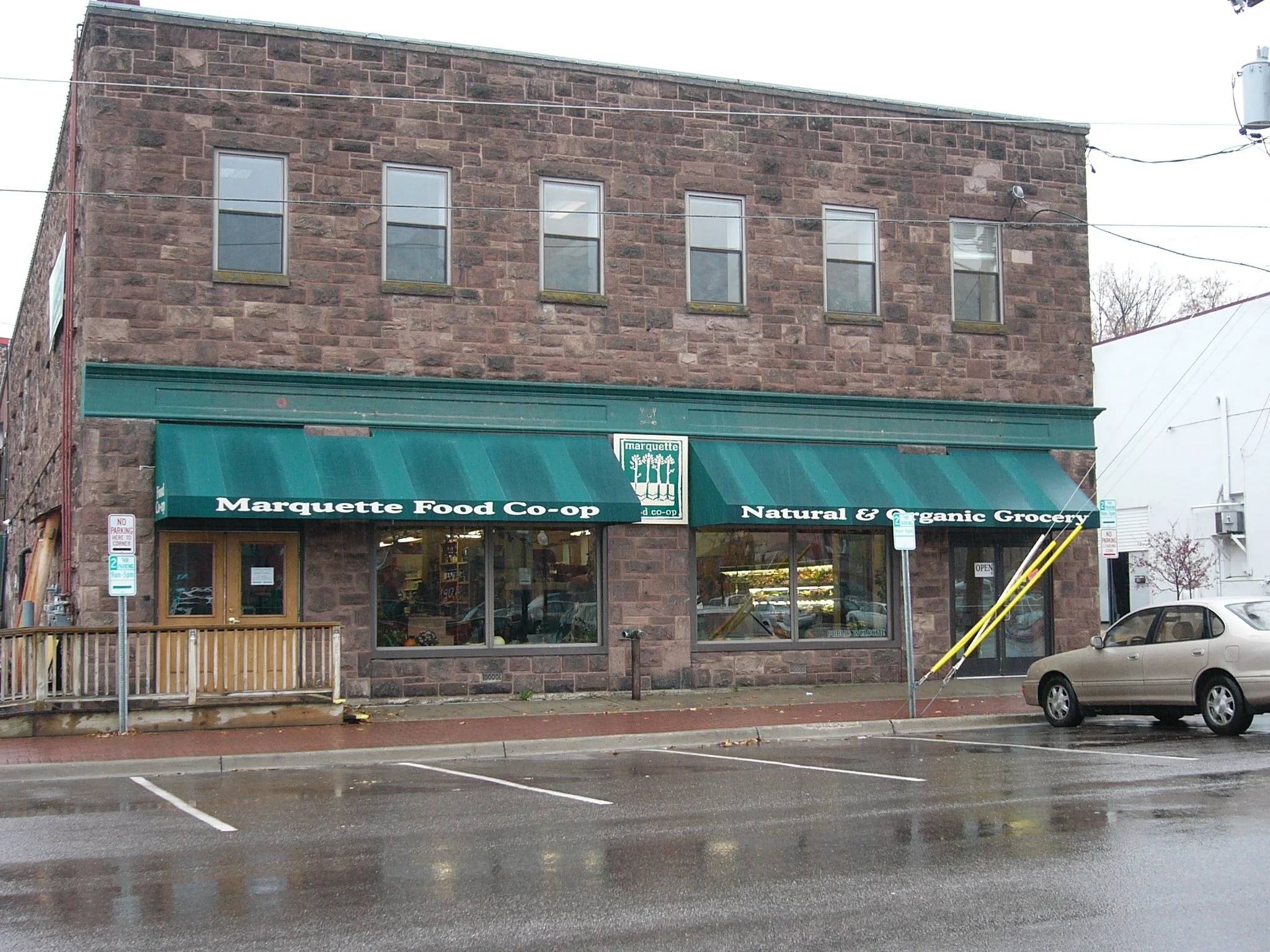
In 2000, there was serious discussion about expanding so that the Co-op could offer its members a one-stop shopping experience. By July 2002, the Co-op expanded from half of the building to the entire bottom floor at 109 W. Baraga Avenue. By June 2005, sales were $1 million per year with 24 staff.
In the spring of 2006, the Co-op was offered the chance to expand into the other half of the building. Although this expansion was sooner than anticipated, the idea was eagerly embraced and a capital campaign generated much of the funding. Most of the building work was accomplished while the store remained open, and in the fall of 2006 the final work was done to remove the dividing wall. By the end of 2011, sales were at $4.4 million, staff grew to 49, and membership sat at nearly 3,000. Again, plans were underway for expansion to a larger facility.
In early 2012, the Co-op purchased an old grocery store at 502 W. Washington Street and hired architects, consultants, and a contractor as plans to expand began. By year’s end there were 3,500 members and 57 staff. Sales reached $5 million and the Co-op deli was operational.
2014-2018
Initiatives
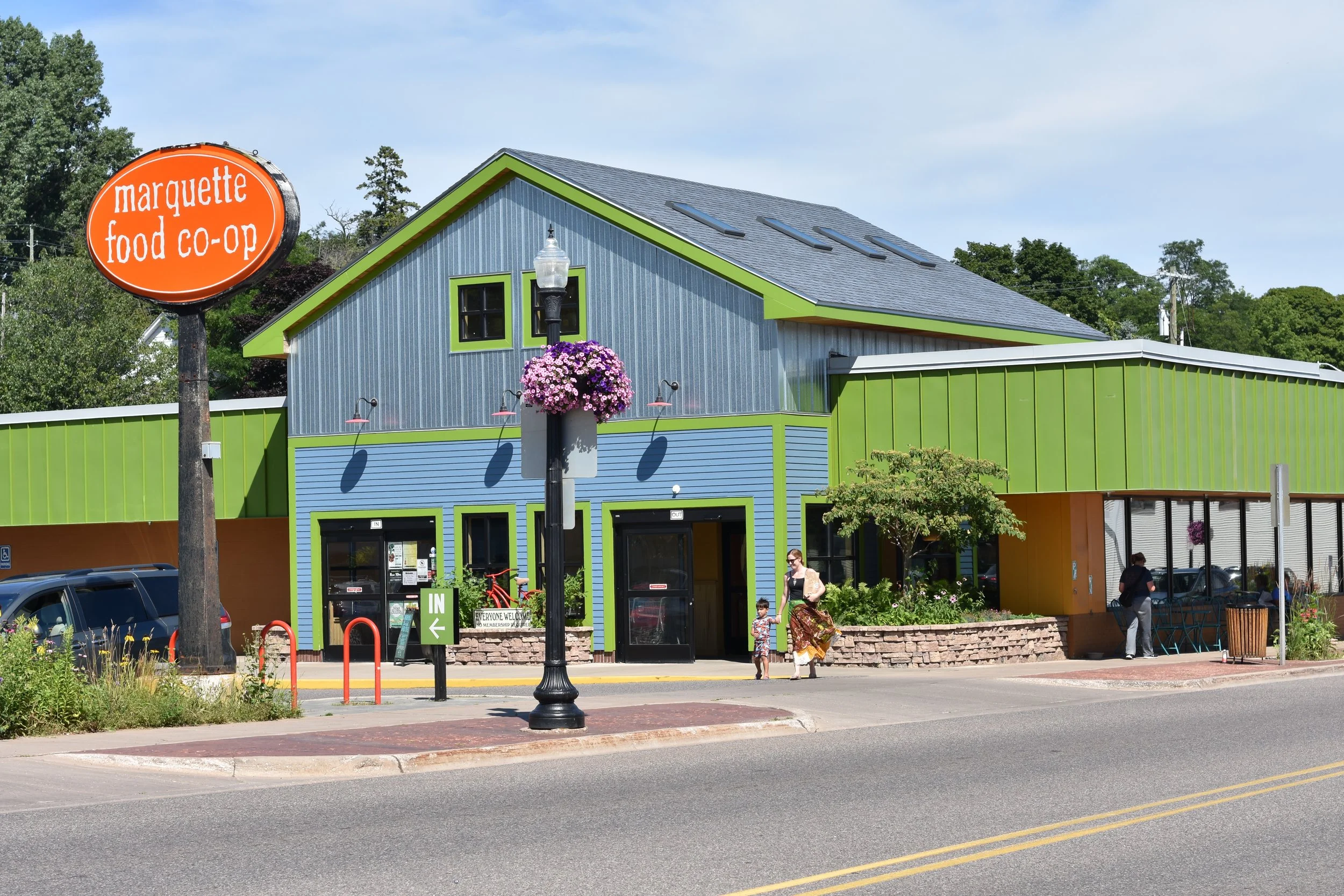
Finally, in May 2014, the Co-op opened the doors of the new store on Washington Street. With its increased capacity, the new space supported the growth of the MFC’s community education programming. This programming on food and farming began in the mid-2000s, but growth of the class curriculum was limited by the spaces available in town. The new store included a meeting room and teaching kitchen that allowed us to double the number of class participants in just one year.
The Marquette Food Co-op has taken on several food access initiatives and shopper incentives since its most recent relocation and expansion. It was the first U.P. grocery store to participate in Double Up Food Bucks, a program that incentivizes healthy eating by doubling SNAP benefits for fresh produce when people use their EBT card to pay. A Farm to School Fundraising program was created that allows schools and students to fundraise with products made or grown in the Upper Peninsula. More tangible benefits were added for owners, including the addition of the well-received Owner Rewards program in 2018, which grants points for every purchase that can be spent later in the store.
2021 - Today
Marquette Baking Company
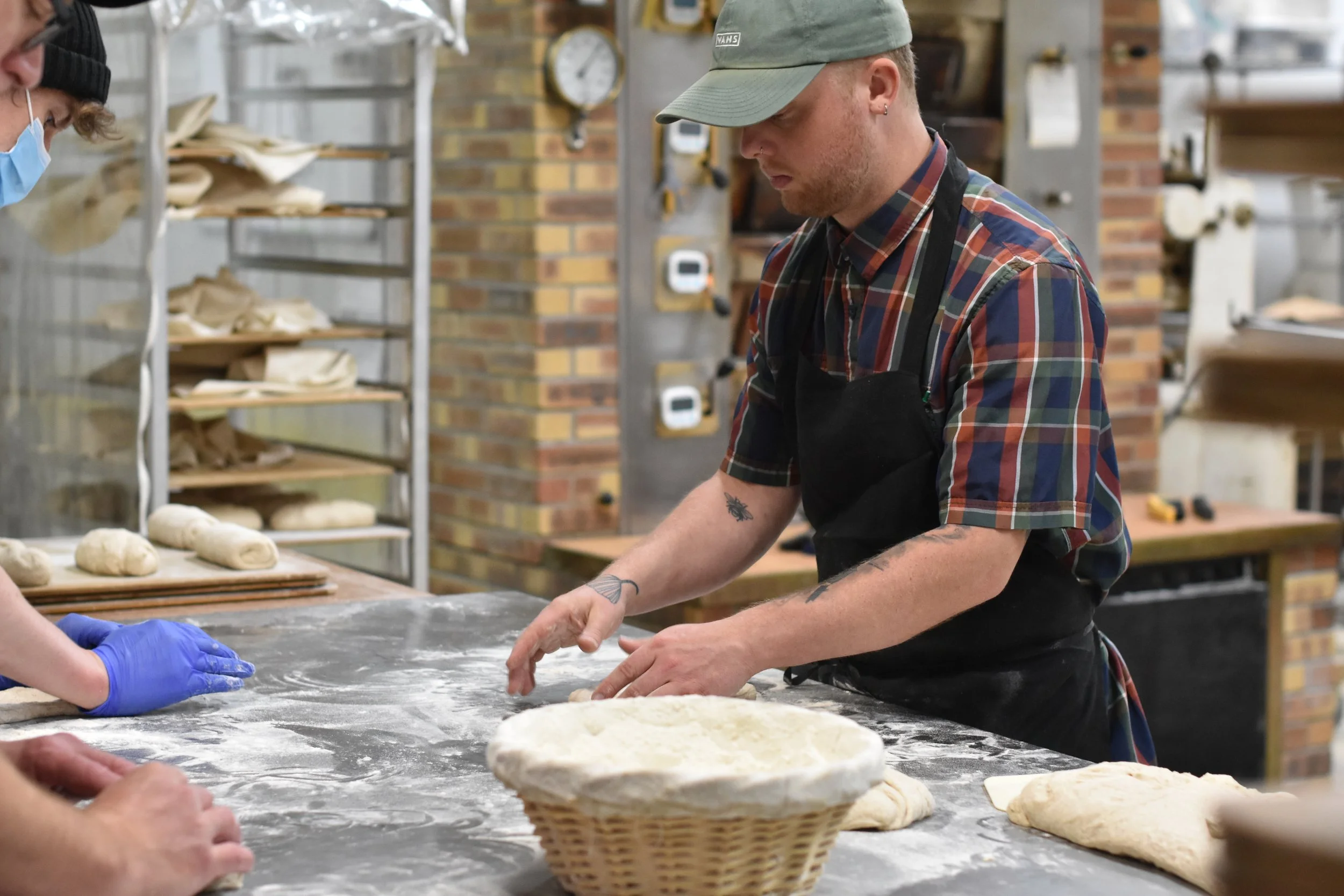
In May of 2021 the Co-op purchased the Marquette Baking Company (MBC). The bakery was the Co-op’s single largest local vendor. Because of pandemic related reasons, the bakery’s former owners intended to close their business. The MFC was able to make a successful cash offer for the bakery and began selling bread through the store in July of 2021. In April of 2022 the retail space at the bakery opened, only to close in February 2023 as most shoppers were buying bread through the store and not the bakery retail space. The retail space at the bakery is used for additional production space.
New initiatives were formed to expand our educational programing & healthy and local food access, including partnerships with the local food pantries, Feeding America West Michigan, the Center for Rural Health, and the Upper Peninsula Commission on Area Progress.
The Co-op had profitable years during this period and the MFC board allocated patronage dividends multiple years, resulting in nearly a By the end of 2024 we had over 14 million in sales and over 5,000 owners.