
Bibimbap
Serves 4 | Recipe from Marquette Food Co-op
Bibimbap is an amazing meal that works in just about any season. While it originates far from the U.P., some of the ingredients are easily available locally, even during the winter.
Don’t let all the separate parts fool you into thinking this is difficult and time consuming. Each component only takes a few minutes to make, and many can be done simultaneously. Plus, you can adjust the recipe according to how much time you have. Suggestions for how to make this a weeknight meal vs a weekend meal are included.
Recipes for tofu and beef are included. Either one is delicious, so take your pick of protein, there is no need to make both unless you want to.
Tofu
If you have the time, place your tofu on a plate and a cutting board or second plate on top and press with a couple of heavy books. This step will get you crispier tofu by pressing out some water but does add time. If you want to make sure you have leftovers double this recipe.
1 lb firm tofu
1 t cornstarch
neutral oil such as vegetable, grapeseed, or safflower
dash of soy sauce
Cut tofu into 1” cubes and toss with cornstarch in a bowl. Coat the bottom of pan with oil. It should cover the pan and come up the sides slightly. For best results, do not use a non-stick pan. This inhibits the tofu getting as crispy.
When the oil is hot, gently add the tofu, being careful of spattering. Let cook on medium heat and try to avoid stirring. You must be patient to get the crispy sides. When you see some crispy edges and light browning, stir or use tongs to flip the tofu to cook the other sides.
When most sides are lightly brown and crispy, add a dash of soy sauce, just enough to coat. Cook briefly to recrisp anything that may have softened from the liquid and remove from heat. Stir in a pinch of salt for a little extra flavor.
Pickled Carrots & Daikon
You can sub either all daikon or all carrots. Use what you have on hand. This recipe has little salt or sugar for a pickle since seasoned rice vinegar already contains both.
2 C mixed carrots and daikon, matchsticked
¾ C seasoned rice vinegar
¾ C water
pinch of sugar
pinch of salt
Place the carrots and daikon in a medium bowl. Mix together all ingredients except the vegetables in a small saucepan. Gently heat, stirring until sugar and salt dissolve. Pour over vegetables and let sit a half hour.
Gochujang Sauce
2 T sesame oil
2 T water
1 T rice vinegar
1 t sugar
¼ C gochujang (Korean fermented chile paste)
1 T sesame seeds
Combine all ingredients in a bowl and stir together until completely combined. This makes plenty of sauce for leftovers.
Korean Cucumber Salad
For an easy weeknight meal, you can use fresh cucumbers on your bibimbap, but if you have a little extra time, these cucumbers are delicious. Great on their own, they have been a big hit when I take them to potlucks or serve as a side to any meal, Korean or otherwise. This is very versatile, you can add thinly sliced onion, a dash of sesame oil, or a little gochujang for a spicier take.
1 medium cucumber, very thinly sliced
2 scallions, thinly sliced
1 T gochugaru (Korean pepper powder, available at the Co-op)
1 T unseasoned rice vinegar
½ t sugar
1 t salt
1 T sesame seeds
2 medium cloves of garlic, minced
Mix the scallions, gochugaru, rice vinegar, sugar, sesame. seeds, salt, and garlic. Stir to combine and add cucumber. It will appear dry but as the cumber sits it will release water, making this saucier. If you would prefer it drier, you can lightly salt the cucumber and let drain for about a half hour before using in the recipe.
Spiced Ground Beef (optional protein)
1 clove garlic, minced
1” piece of fresh ginger, minced
2 t sesame oil
1 lb ground beef
2 T Gochujang Sauce
Sprinkle of Gochugaru, optional
Heat sesame oil in pan and add garlic. Quickly sauté then add meat. When meat is cooked, stir in Gochujang sauce until fully coated. Add a sprinkle of gochugaru if desired.
Seasoned Greens
1 small bunch of kale or large bunch of spinach
1 T sesame oil
3 cloves of garlic, minced
1 t minced fresh ginger
2 t rice vinegar
1 T soy sauce
2 t sesame seeds
½ t salt
sprinkle of sugar, optional
Strip kale leaves from stem. Slice stems thinly, roughly chop leaves.
Heat sesame oil in a large pan and add garlic and ginger.
Stir, ensuring the spices do not burn, on medium heat and when fragrant, add kale stems. Stir in kale leaves so they are coated in seasoned oil, then add the rice vinegar to help wilt it. Add soy sauce, salt, and (if using) sugar and cook over low to medium low heat until all the kale is soft, remove from heat.
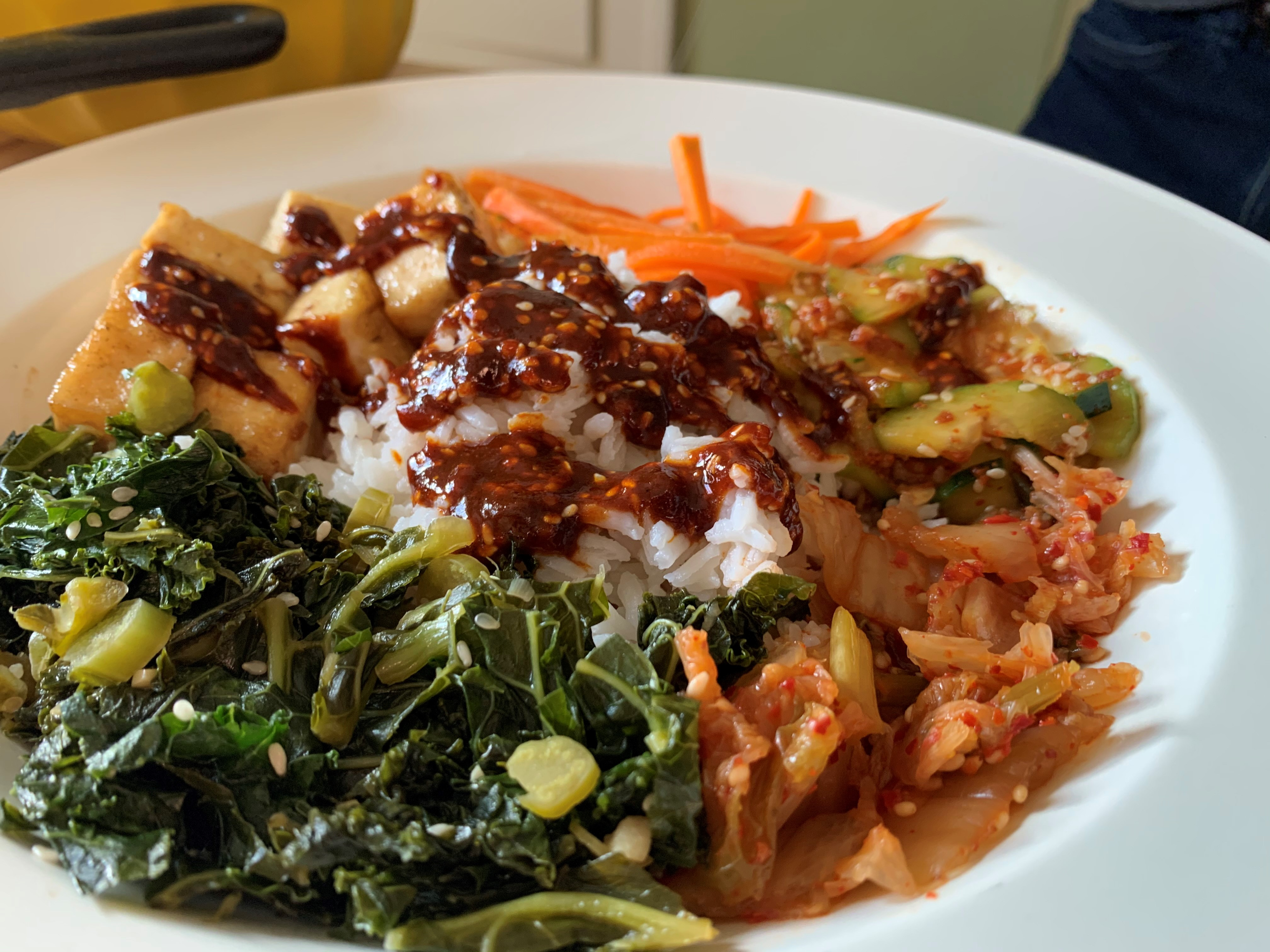
Bowl Assembly
For making this more like Bibimbap you’d get in a Korean restaurant, you can fry your cooked rice in a an oiled, hot skillet to add crispiness.
3 C cooked white rice, long or short grain will work.
pickled carrots & daikon
fried tofu or meat
seasoned kale
Gochujang sauce
thinly sliced cucumber or Korean cucumber salad
Optional additions: bean sprouts, fried egg, mushrooms sautéed in sesame oil and soy sauce, Korean-style cucumbers, sliced scallions
Place a dollop of rice in your bowl. Add tofu or meat and vegetables, drizzle with sauce. Top with fried egg and scallions, if using. Can also sprinkle extra sesame seeds on top.